
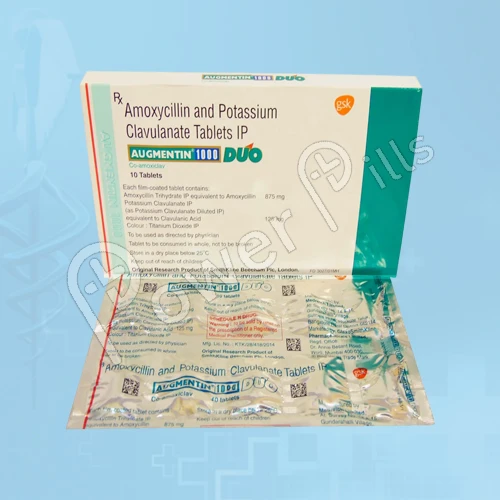
Augmentin 1000 Mg
Price range: $75.00 through $450.00
Augmentin 1000 Mg is a broad-spectrum antibiotic that combines amoxicillin and clavulanic acid to fight bacterial infections. It treats respiratory, skin, urinary, and dental infections effectively. Doctors prescribe Augmentin 1000 Mg for moderate to severe bacterial conditions requiring reliable antibiotic coverage.
| Tablet | Price | Quantity | |
|---|---|---|---|
| 30 Tablet/s | $75.00 | ||
| 60 Tablet/s | $125.00 | ||
| 120 Tablet/s | $220.00 | ||
| 200 Tablet/s | $330.00 | ||
| 300 Tablet/s | $450.00 |

Augmentin 1000 Mg
Augmentin 1000 Mg is a prescription antibiotic that belongs to the penicillin group of medicines. It contains two active ingredients: amoxicillin and clavulanic acid. Amoxicillin attacks bacteria directly, while clavulanic acid prevents bacterial resistance. This dual action makes Augmentin 1000 Mg highly effective against a wide range of infections.
Doctors commonly recommend Augmentin 1000 Mg when standard antibiotics fail or when infections show resistance. The medication works best against bacteria that produce beta-lactamase enzymes, which often block regular penicillin antibiotics.
How Augmentin 1000 Mg Works
Augmentin 1000 Mg stops bacterial growth by disrupting cell wall formation. Amoxicillin damages the bacterial cell wall, causing the bacteria to die. Clavulanic acid protects amoxicillin from enzyme breakdown. Together, they ensure consistent antibacterial activity.
Augmentin 1000 Mg targets bacteria without affecting viral infections such as the common cold or flu.
Uses of Augmentin 1000 Mg
Doctors prescribe Augmentin 1000 Mg to treat various bacterial infections, including:
-
Respiratory tract infections such as pneumonia and bronchitis
-
Sinusitis and throat infections
-
Ear infections (otitis media)
-
Urinary tract infections
-
Skin and soft tissue infections
-
Dental and gum infections
-
Bone and joint infections
Augmentin 1000 Mg provides reliable results when infections show moderate to severe symptoms.
Benefits of Augmentin 1000 Mg
Augmentin 1000 Mg offers several advantages over single-ingredient antibiotics:
-
Broad-spectrum bacterial coverage
-
Effective against resistant bacteria
-
Faster symptom relief
-
Reduced treatment failure risk
-
Suitable for serious infections
Because of its strong formulation, Augmentin 1000 Mg often shortens recovery time when taken correctly.
Dosage and Administration
Doctors usually prescribe Augmentin 1000 Mg once or twice daily, depending on infection severity. Patients should take the tablet at the start of a meal to reduce stomach discomfort.
General dosage guidelines include:
-
Adults: One tablet every 12 hours
-
Severe infections: As directed by a physician
Patients must swallow Augmentin 1000 Mg whole with water. Crushing or chewing the tablet should be avoided.
Always complete the full antibiotic course, even if symptoms improve early.
Side Effects of Augmentin 1000 Mg
Most people tolerate Augmentin 1000 Mg well. Mild side effects may include:
-
Nausea
-
Diarrhea
-
Stomach pain
-
Headache
-
Skin rash
Rare but serious side effects include allergic reactions, liver problems, or severe diarrhea. Medical help should be sought immediately if breathing difficulty, swelling, or yellowing of the skin occurs.
Precautions and Warnings
Augmentin 1000 Mg should be used carefully in certain conditions:
-
Penicillin allergy
-
Liver disease
-
Kidney problems
-
History of antibiotic-related diarrhea
Alcohol consumption should be limited during treatment. Augmentin 1000 Mg should only be used during pregnancy or breastfeeding after medical advice.
Drug Interactions
Some medicines may interact with Augmentin 1000 Mg, including:
-
Blood thinners
-
Allopurinol
-
Oral contraceptives
-
Other antibiotics
Patients should inform their doctor about all medications before starting Augmentin 1000 Mg.
Storage Instructions
Augmentin 1000 Mg should be stored at room temperature away from moisture and heat. Tablets must be kept out of reach of children.
Why Doctors Choose Augmentin 1000 Mg
Doctors trust Augmentin 1000 Mg because of its high success rate against resistant bacteria. Its dual-ingredient formula offers dependable infection control across multiple medical conditions.
Patients who follow the prescribed dosage experience faster healing and fewer complications.
Frequently Asked Questions (FAQ)
What is Augmentin 1000 Mg used for?
Augmentin 1000 Mg treats bacterial infections of the lungs, skin, urinary tract, ENT region, and teeth.
How long does Augmentin 1000 Mg take to work?
Most patients notice improvement within 48–72 hours after starting Augmentin 1000 Mg.
Can Augmentin 1000 Mg be taken on an empty stomach?
Augmentin 1000 Mg works best when taken with food to reduce stomach side effects.
Is Augmentin 1000 Mg safe for children?
Doctors may prescribe Augmentin 1000 Mg to children only in adjusted doses and under supervision.
Can Augmentin 1000 Mg cause diarrhea?
Yes, mild diarrhea may occur. Probiotics and hydration often help manage this effect.
Can Augmentin 1000 Mg treat viral infections?
No, Augmentin 1000 Mg only treats bacterial infections and does not work against viruses.
| Tablet | 30 Tablet/s, 60 Tablet/s, 120 Tablet/s, 200 Tablet/s, 300 Tablet/s |
|---|---|
| Active Ingredient (Generic Name) | Amoxycillin |
| Indication | Bacterial Infection |
| Manufacturer | GSK |
| Packaging | 10 Tablets in 1 strip |
| Strength | 1000 mg |
| Delivery Time | 6 To 15 days |
Related products







 Augmentin 1000 Mg
Price range: $75.00 through $450.00
| Tablet | Price | Quantity | |
|---|---|---|---|
| 30 Tablet/s | $75.00 | ||
| 60 Tablet/s | $125.00 | ||
| 120 Tablet/s | $220.00 | ||
| 200 Tablet/s | $330.00 | ||
| 300 Tablet/s | $450.00 |