
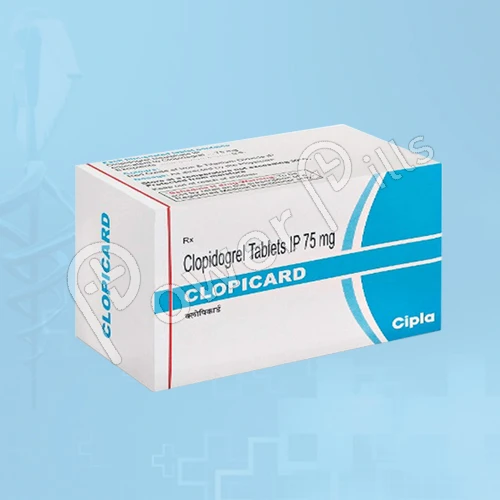
Clopidogrel (Clopicard 75 Mg)
Price range: $55.00 through $155.00
Clopidogrel (Clopicard 75 Mg) is an antiplatelet medicine used to prevent harmful blood clots. It supports heart and vascular health by reducing the risk of heart attack and stroke in patients with cardiovascular conditions when taken as prescribed.
| Tablet | Price | Quantity | |
|---|---|---|---|
| 100 Tablet/s | $55.00 | ||
| 200 Tablet/s | $90.00 | ||
| 300 Tablet/s | $110.00 | ||
| 500 Tablet/s | $155.00 |

Introduction
Cardiovascular diseases remain one of the leading causes of serious health complications worldwide. Blood clots play a major role in heart attacks and strokes by blocking blood flow to vital organs. Preventing clot formation is essential for patients with existing heart or blood vessel conditions.
Clopidogrel (Clopicard 75 Mg) is widely prescribed to reduce the risk of clot-related events. It helps keep blood flowing smoothly through arteries and supports long-term heart health. Regular use under medical supervision significantly lowers the risk of life-threatening complications.
What Is Clopidogrel (Clopicard 75 Mg)?
Clopidogrel (Clopicard 75 Mg) contains clopidogrel, an antiplatelet agent that prevents platelets from sticking together. Platelets are blood cells that form clots to stop bleeding. Excessive platelet activity can lead to dangerous clots.
This medication does not dissolve existing clots. Instead, it prevents new clots from forming. Doctors commonly prescribe Clopidogrel (Clopicard 75 Mg) to patients with heart disease, stroke history, or peripheral artery disease.
How Clopidogrel (Clopicard 75 Mg) Works
The medicine works by blocking platelet activation in the bloodstream. It inhibits a specific receptor on platelets that triggers clot formation. As a result, platelets become less sticky.
This action helps maintain proper blood flow through narrowed or damaged arteries. Clopidogrel (Clopicard 75 Mg) reduces the chances of artery blockage that can lead to heart attack or stroke.
Uses of Clopidogrel (Clopicard 75 Mg)
Clopidogrel (Clopicard 75 Mg) is used to prevent blood clots in people with cardiovascular conditions. It is commonly prescribed after heart attacks or ischemic strokes.
The medicine is also used in patients with coronary artery disease. It supports treatment after angioplasty or stent placement. Peripheral artery disease patients may benefit from reduced clot risk during long-term therapy.
Benefits of Clopidogrel (Clopicard 75 Mg)
One major benefit is the reduced risk of heart attack and stroke. The medication helps protect arteries from clot-related blockage. This protection supports better long-term cardiovascular outcomes.
The once-daily tablet offers convenient dosing. Clopidogrel (Clopicard 75 Mg) is well studied and widely trusted. Consistent use improves survival rates in high-risk patients.
Dosage and Administration
The usual dose is one tablet taken once daily. Doctors may recommend taking it at the same time each day for consistency. The tablet should be swallowed with water.
Food does not affect absorption. Patients should not stop the medicine without medical advice. Long-term use may be required depending on the condition.
Who Can Use Clopidogrel (Clopicard 75 Mg)?
Adults with heart disease, stroke history, or blood vessel disorders commonly use this medicine. It is suitable for patients who require long-term clot prevention.
People with bleeding disorders should inform their doctor before starting therapy. Liver conditions may also require dose monitoring.
Possible Side Effects
Most patients tolerate the medicine well. Common side effects include mild bleeding, bruising, or stomach discomfort. These effects usually remain manageable.
Serious bleeding occurs rarely but requires immediate medical attention. Symptoms such as black stools or unusual bleeding should be reported promptly.
Precautions and Warnings
Clopidogrel (Clopicard 75 Mg) increases bleeding risk. Surgical or dental procedures should be discussed with a doctor in advance.
Alcohol intake should be limited. Patients should inform healthcare providers about all medical conditions before starting treatment.
Drug Interactions
Certain medicines may increase bleeding risk when taken together. These include blood thinners, NSAIDs, and some antidepressants.
All current medications and supplements should be disclosed. Medical guidance ensures safe combination therapy.
Storage Instructions
The tablets should be stored at room temperature. Moisture and direct sunlight should be avoided.
The container should remain tightly closed. Expired tablets should be discarded responsibly.
Frequently Asked Questions (FAQ)
What is Clopidogrel (Clopicard 75 Mg) used for?
It is used to prevent blood clots that can cause heart attacks and strokes.
Can it be taken daily?
Yes, it is usually taken once daily as prescribed.
Does it thin the blood?
It reduces platelet activity, which lowers clot formation risk.
Can it be taken with food?
Yes, it can be taken with or without food.
What happens if a dose is missed?
The missed dose should be taken as soon as remembered unless it is close to the next dose.
Conclusion
Clopidogrel (Clopicard 75 Mg) plays a vital role in preventing serious cardiovascular events. By reducing platelet activity, it helps protect against heart attacks and strokes. When used consistently under medical supervision, Clopidogrel (Clopicard 75 Mg) supports long-term heart health and improves patient safety.
| Tablet | 100 Tablet/s, 200 Tablet/s, 300 Tablet/s, 500 Tablet/s |
|---|---|
| Active Ingredient (Generic Name) | Clopidogrel |
| Indication | Prevention of blood clots |
| Manufacturer | Cipla Ltd |
| Packaging | 15 Tablets in 1 strip |
| Strength | 75mg |
| Delivery Time | 6 To 15 days |
Related products









 Clopidogrel (Clopicard 75 Mg)
Price range: $55.00 through $155.00
| Tablet | Price | Quantity | |
|---|---|---|---|
| 100 Tablet/s | $55.00 | ||
| 200 Tablet/s | $90.00 | ||
| 300 Tablet/s | $110.00 | ||
| 500 Tablet/s | $155.00 |